What philosophy can offer when it can’t tell me whether to quit my job
A few weeks ago, I almost died at work.
There was a gas leak in the building where I work, and in the process of trying to protect the institution’s largest financial asset—the building itself—I put myself in danger. It took me about a day to really appreciate what had happened. I went back to work and tried to pretend as if everything was normal, but it felt horrible to be there. Eventually, I took sick time because I realized I needed to go home and recover.
Rationally, I recognize that what happened was accidental. No one intended to put me in danger. But the whole thing felt all too meaningful. It felt like a literal embodiment of my tendency to put the well-being of the things I care about before my own well-being.
The timing certainly did not help. For months, I had been living with uncertainty about the future of my position. I knew that a decision about my employment was coming, but that decision would be made by other people in a room where I wasn’t present. There was something almost absurd about nearly exploding to death to protect an institution’s largest financial asset only for that same institution, that very same week, to remain uncertain about my place within it.
As I sat with what had happened, I kept coming back to the question of whether putting myself in danger had actually been the right thing to do. Part of me wanted to understand my actions as courageous. I cared deeply about this place, I saw something threatening it, and I acted. But another part of me was increasingly uncomfortable with that interpretation.
Aristotle’s account of the virtues came to mind. For Aristotle, virtue is not simply a matter of doing as much of the seemingly good thing as possible. Courage, for example, exists as a mean between cowardice and recklessness. There are circumstances where running toward danger is courageous, but that does not mean running toward danger is always the courageous thing to do.
So was courage really the virtue I needed to practice that day? I don’t know.
But this is part of what I mean when I talk about practical philosophy. Aristotle cannot go back in time and tell me what I should have done in that moment. What his account of courage can do is give me another way to examine the story I am telling myself about what I did. Maybe putting myself in danger for something I cared about was courageous. Maybe it was reckless. Maybe the fact that I so quickly interpret self-sacrifice as virtue is itself something worth examining.
There is something seductive about interpreting self-sacrifice as virtue. We praise people for putting others first. We praise dedication, loyalty, courage, generosity. But there has to be a point where courage becomes recklessness, generosity becomes self-abandonment, and loyalty becomes a refusal to acknowledge that a relationship is not reciprocal.
For me, these aren’t abstract philosophical questions. I spent much of my childhood being forced to put the needs and well-being of other people before my own. I then foolishly chose to do the same thing in more than one romantic relationship. A significant part of my life since escaping abuse has involved figuring out what it means to have relationships where I do not need to disappear in order to maintain them.
And now I have to wonder whether I have recreated some version of that relationship with an institution.
That question brought me to another philosophical problem: agency.
There is a lot about my current situation that I cannot control. I did not control the circumstances that put me in danger, and the decision about my employment is happening in rooms where I am not present. But I have also started to recognize that I had surrendered too much of what was happening to me to the institution. I was waiting to find out what they would decide about my life.
Those decisions have real material consequences for me. I cannot simply Stoic my way into pretending otherwise. But the institution is also not the only entity here capable of making decisions.
I am also deciding what happens next.
I think that might be the most useful philosophical realization I have had through all of this. I need to continue to be the author here. I need to write my own story and stop giving someone else the pen.
That doesn’t necessarily mean leaving. Part of the story that I am writing involves the institution making genuine repair. I am reconsidering what I give to it and what I need from it in return. Reclaiming my agency means recognizing that staying is also a choice, and that I get to decide the terms under which I continue to participate.
I did not arrive at that conclusion immediately. Within days of the gas leak, I learned that the decision about my position had once again been delayed. I wrote a rather robust resignation letter that would have removed me from my job and my community wholesale. In the span of a single week, I had almost died at work, learned that the uncertainty I had been living with would continue, and decided I was ready to walk away from the whole thing.
But I didn’t send the letter.
Instead, I went to the woods.
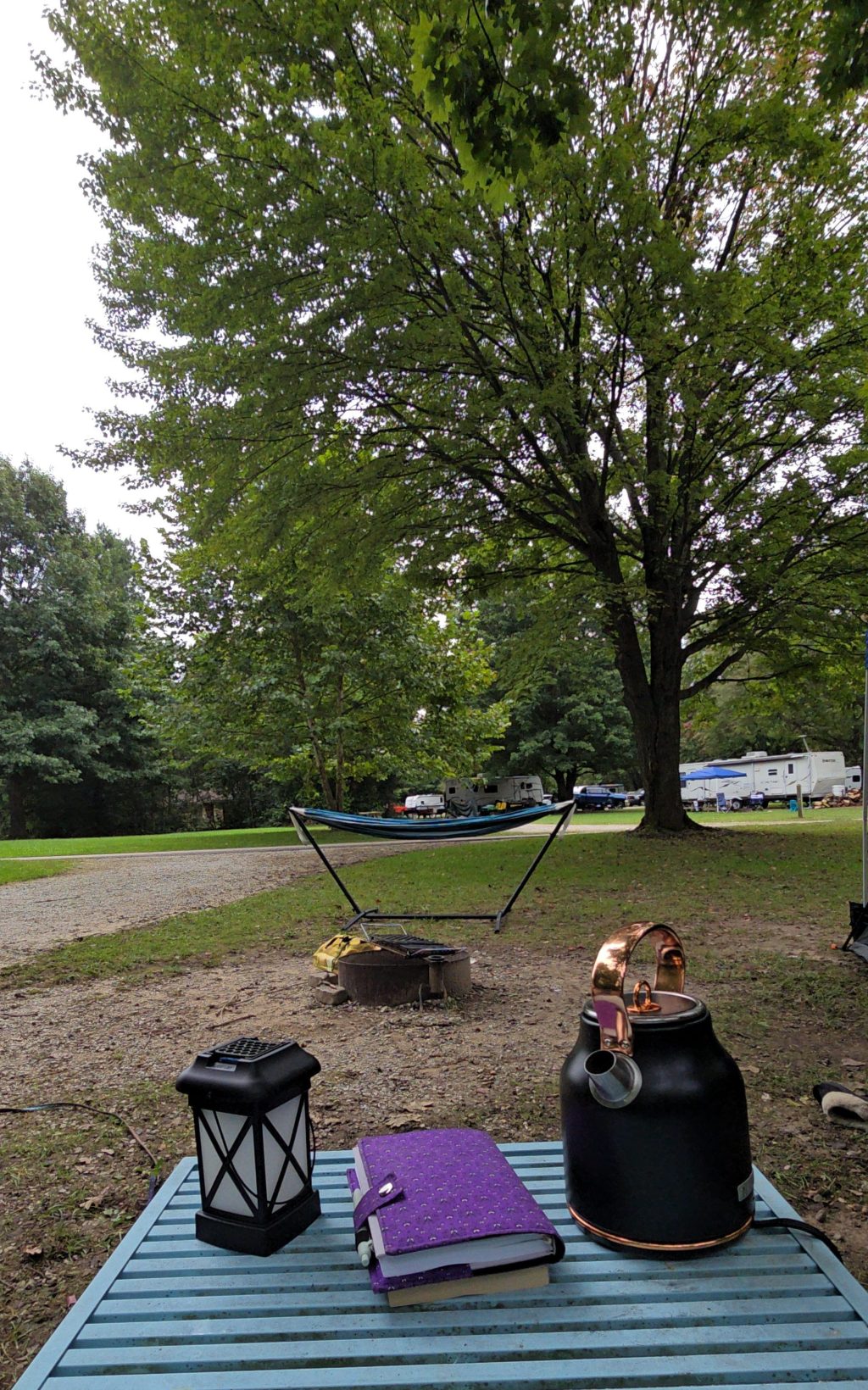
I took some time. I read. I sat in my hammock. I stared at a fire. And I sat with trees that have existed longer than any of my problems.
While yes, I am trained as an analytic philosopher, and I find the insights of philosophers soothing, I also find wisdom in other places. The trees know things that no philosopher could hope to articulate. And as a lover of wisdom, I do not limit my search to only entities capable of the written word.
The trees did not tell me whether I should quit my job. They did not tell me whether the institution can repair what has happened or what exactly I should do next. Mostly, they reminded me that I don’t actually need to know yet.
My life almost ended. But it didn’t. Like the trees, the drama occurred and I continue onward. And like the trees, I won’t be making any sudden upheavals.
That doesn’t mean pretending nothing happened. I am noticing what happened and what it revealed about me. I am reconsidering what I give, what I need, and what repair would look like. I am reworking what makes sense in my story and figuring out how to continue to keep it mine.
Maybe that is what practical philosophy looks like sometimes. Not finding the philosopher who can tell you exactly what to do, but slowing down enough to examine the story you are telling about what has happened to you, asking better questions about what you are doing next, and remembering that you still have some say in how the story continues.


Leave a Reply